Canada, We're Going to Need a Bigger Rake
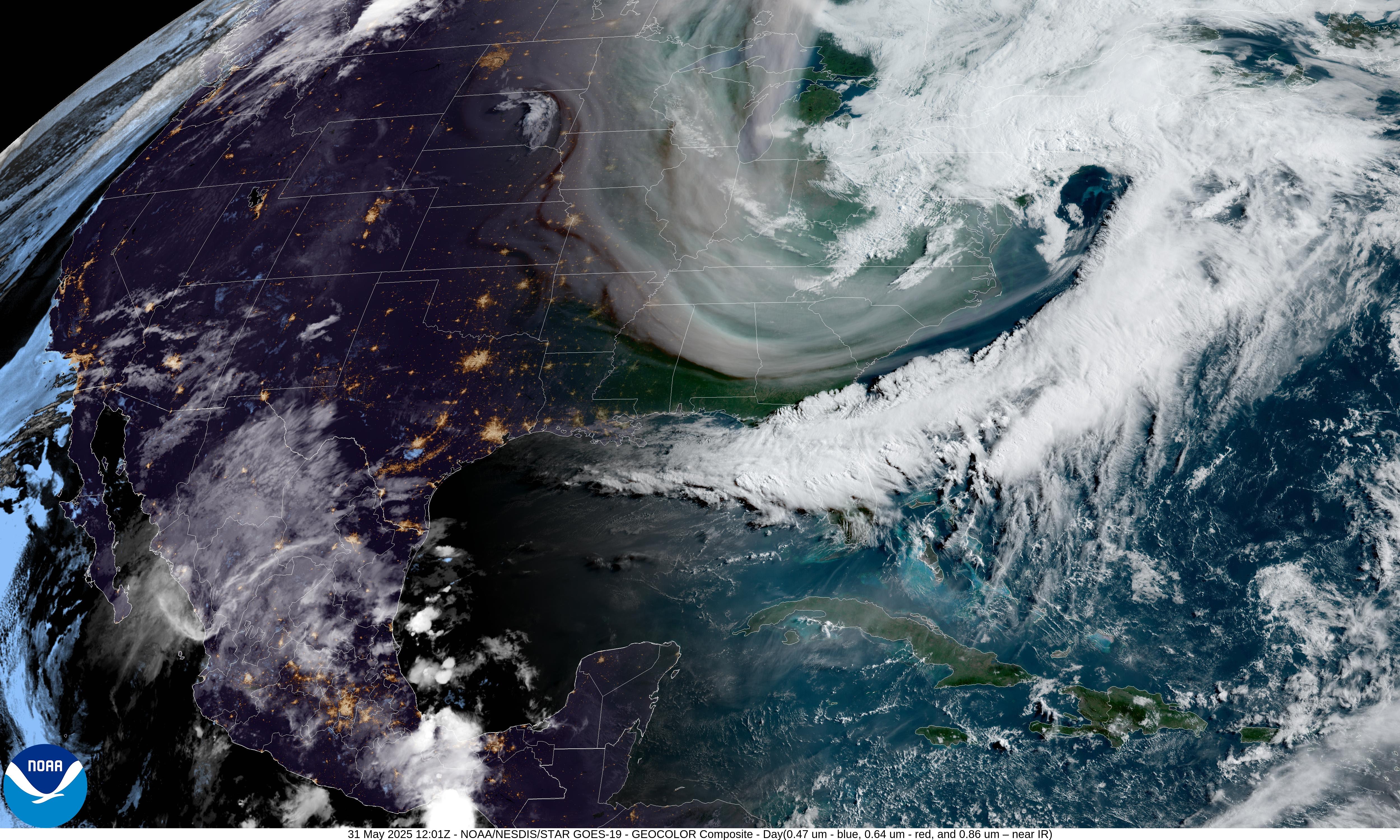
Over the last several years it has become common practice for U.S. politicians, particularly Republicans, to level condescending, chastising, and this year, threatening missives to Canadian leaders demanding that they “do something” to reduce wildfire smoke from crossing the border and contaminating “American lungs.” United States senator (R-Ohio) Bernie Moreno threatened to impose sanctions on Canada for not doing enough. Republican congressman John James issued a “final warning” to Canada to “manage [our] forests to prevent these fires,” before making thinly veiled threats against Canadian sovereignty, as though Canada was some kind of vassal state. Republican Lisa McClain (R-Michigan) complained about Americans having to “breathe Canadian negligence,” before reminding her constituents that last year American firefighters were deployed to Canada to “mitigate the situation up there since they aren’t really doing much,” while seeming to ignore the massive deployment of Canadian firefighters dispatched to California last year during their wildfire crisis, even while her president was threatening to annex Canada. And Donald Trump himself has, unsurprisingly, threatened to impose more tariffs on Canada for allowing wildfire smoke to drift across the Canada-US border.
The mind-numbing ignorance on display by these Americans is staggering. It’s obviously far more expedient to lob senseless accusations for the sake of scoring political points than acknowledge the hundreds of wildfires raging through the American mid-west, or the Canadian firefighters routinely dispatched to fight fires on U.S. soil, or the Canadian firefighters who have given their lives to protect American interests; such as helicopter pilot Nicholas Dale of Sooke, B.C., who died on July 14th of this year while fighting a wildfire in Aspen, Colorado.
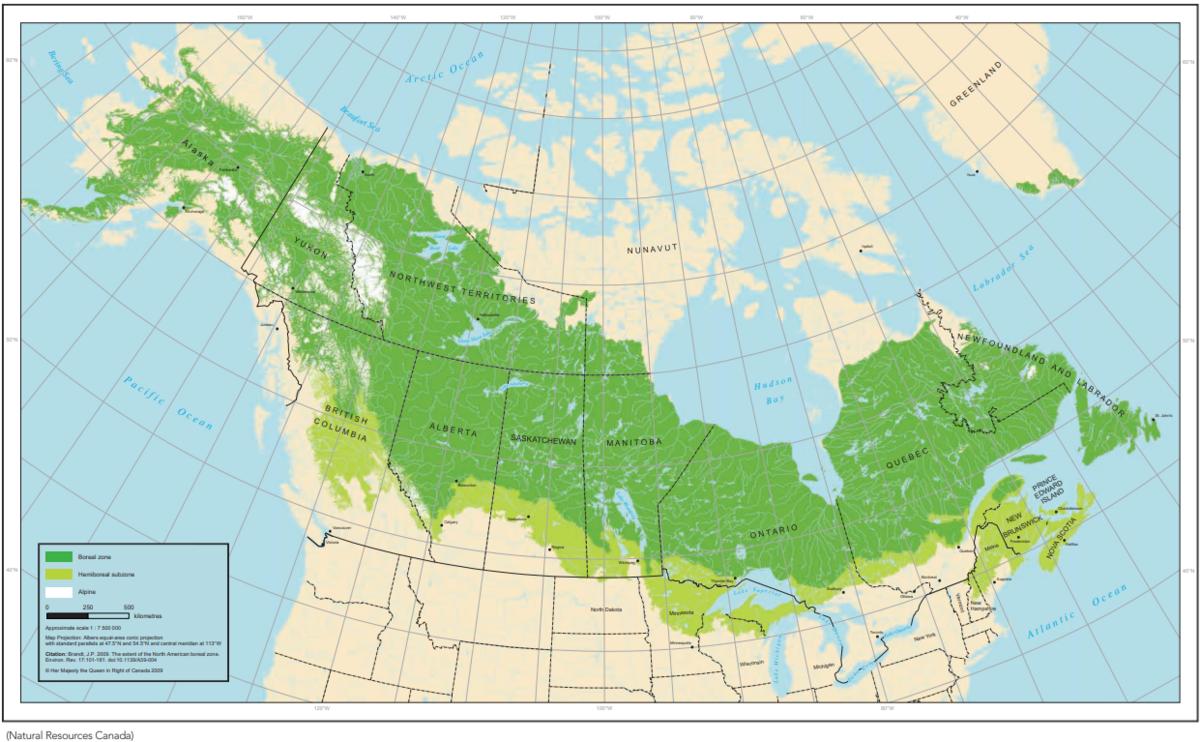
These accusations of “not doing enough” are often framed around Canada’s apparent poor forest management practices. Trump said, “We are holding Canada responsible for the fact that they are not properly maintaining their Forests [sic], and Brush [sic] therein, and the United States is being unnecessarily invaded by filthy, polluted, and unhealthy air.” The suggestion that Canada should be culling standing-dead trees and clearing dried underbrush to minimize the fuel that feeds these massive fires betrays a profound misunderstanding of the enormity of Canada’s hinterland. The Canadian boreal forest is one of the largest contiguous tracts forest remaining on Earth, representing 1.3 billion acres stretching from British Columbia in the west to Newfoundland in the east. Clearing dried underbrush in such a vast and remote wilderness would be equivalent to draining Lake Michigan1 with a bail bucket, if Lake Michigan was inaccessible by road. The problem is not poor forestry management practices. The problem is climate change.
We can debate about the cause of any individual fire. Not every wildfire is the result of climate change. Climate change does not ignite fires; humans and lightning ignite wildfires. Climate change sets the conditions for frequent, hot, and increasingly damaging wildfires. For example, climate change favours insect pests such as spruce budworm, causing them to migrate with increasing temperatures into northern habitats, killing huge numbers of trees as they go, converting vast tracts of forest into tinder boxes. Higher average temperatures and lower levels of precipitation dry forests to the point where they can ignite with a single spark. And even the frequency with which these forests see sparks is increased with climate change. For every degree of warming that comes with climate change, the frequency of lightning increases by 12 percent.
None of this is new. Climate scientists have known for over 150 years that releasing carbon into the atmosphere will trap heat and increase temperatures. The first scientific paper ever published that demonstrated the relationship between increased carbon dioxide in the atmosphere and increasing temperatures was by Eunice Foote in 1856. About a hundred years later, in the 1950’s, scientists working for American Big Oil advanced a deep understanding of how burning fossil fuels would contribute carbon to the atmosphere, which in turn would increase global temperatures. Then American Big Oil spent billions of dollars on a tried-and-tested propaganda campaign to cover it up. As the tobacco industry—who originated and perfected the propaganda strategy adopted by Big Oil—learned all too well, nothing kills profits more than good science showing the negative consequences of a product when it’s used exactly as intended. Even with a clear understanding that burning fossil fuels to power our vehicles, heat our homes, and sustain the global economy would profoundly alter our environment, the campaign to sow doubt was astonishingly successful. We continue to pour about 9.1 billion tonnes of carbon (roughly equivalent to 38 billion tonnes of carbon dioxide) into the atmosphere each year.
Also not new is our understanding that increasing global temperatures will increase the frequency, size, and intensity of wildfires. Wildfires are natural and an important part of any forest ecosystem. Soil nutrients that are locked up in vegetation are liberated and recycled back into the ecosystem by fire. Fire is also necessary for certain species to grow. For example, jack pine only grows in fire-dominated habitats because it requires the heat of fire to open its hard, waxy cones to release its seeds. Without fire, we wouldn’t have jack pines. Although some wildfires of today are of the small, regenerative type, an increasing proportion is growing into massive, extremely hot, and destructive conflagrations. We can see the damage for ourselves when these fires burn through our communities; like Slave Lake, Fort McMurray, and Lytton, just to name a few.
It’s these fires—the massive, damaging conflagrations, not the small, local regenerative fires—that have been producing the smoke that’s blanketed much of North America for the past several summers. Much of that smoke is generated in Canada because Canada is home to one of the largest contiguous tracts of forest in the world. And Canada is partly to blame for the warming temperatures that gave rise to the conditions that produced some of these massive fires. Canadians are among the worst carbon emitters on the planet, ranked ninth overall, emitting about 748 M tonnes of carbon dioxide annually. Clearly, we can and should do better. But the United States is the second-worst polluter on Earth, just behind China, emitting about six billion tonnes of carbon dioxide annually, representing close to one-fifth of the global total! So it’s a little rich for American politicians to lecture Canadians about climate-enhanced wildfires when they’re responsible for ~20% of the atmospheric loading that produced those fires compared to Canada’s ~2%.
What’s worse is that the current U.S. administration has been outspoken in its denial of the existence of human-induced climate change. Without summarizing the enormous wealth of evidence from around the world and over multilple domains in support of climate change, suffice it to say it is one of the most well established scientific facts there is. It’s no secret that American politicians are beholden to their corporate lobbyists, and there’s no corporate lobbyist with deeper pockets than American Big Oil. Is it any wonder, then, why the current Trump administration would purge any mention of “climate change” or any evidence for it from federal servers? Should it be surprising that they would cut funding from some of the top climate change scientists and scientific institutions in the world, like the National Science Foundation (NSF) or the National Oceanic and Atmospheric Administration (NOAA)?
Climate change isn’t going away anytime soon. In fact, unless we start getting serious about making significant changes to how we consume resources and transport goods in support of our global trading system, it’s likely to get worse. Much worse. That means that choking smoke descending on major population centres throughout North America will become as predictable as spring giving way to summer, day giving way to night, and American politicians giving away whatever shred of moral integrity they might have had to the highest paying corporate lobbyist. Unless they’re prepared to get serious about mitigating the highly predictable effects of climate change—like increasing wildfire activity—they better get used to it. It’s only going to get worse from here. As predicted.
Now about those floods in Texas . . .
-
↩︎For comparison, the surface area of Lake Michigan is only 14.3 million acres, or 1.1% of the area occupied by the Canadian boreal forest.